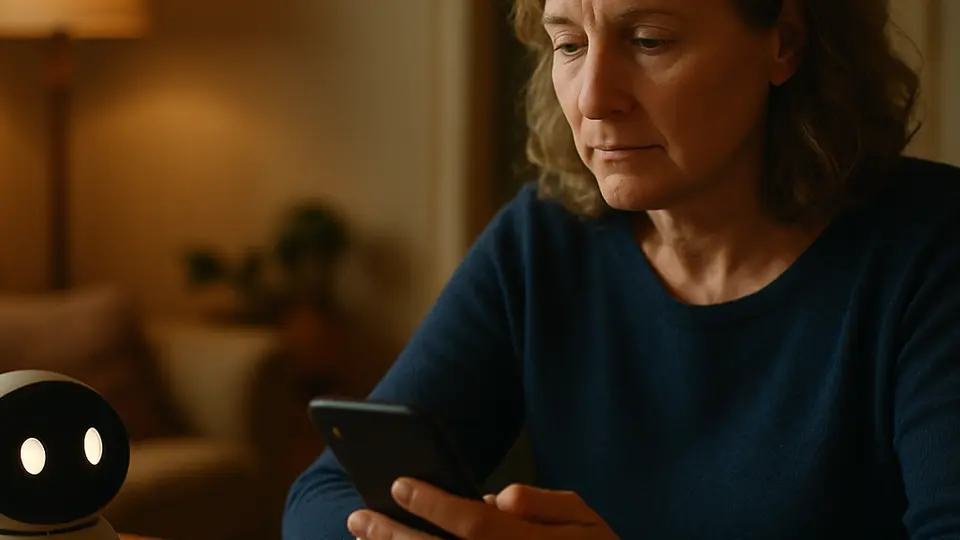
AI reminders and scheduling tools can meaningfully help seniors manage daily routines — medications, appointments, tasks — and support a sense of independence. The risk is that heavy reliance on reminders can mask worsening memory problems that need medical attention. Regular check-ins with family and a doctor remain essential.
Forgetting where the keys are is one thing. Forgetting whether you took your blood pressure medication is something else entirely. For seniors managing mild memory changes, AI reminder tools offer real practical help — a voice that prompts the 8 a.m. pill, a calendar that talks, an assistant that can be asked "what do I have today?" at any hour.
But technology that compensates for a problem can also hide it. That's the tension this guide addresses.
What AI Reminder Tools Can Actually Do
Today's AI tools can handle a surprising range of memory-support tasks:
Medication reminders. A smart speaker like Amazon Echo or Google Nest can announce reminders at set times. More specialized apps can confirm whether the person responded to the reminder and notify a caregiver if they didn't.
Appointment management. A phone assistant (Siri, Google Assistant) can read out the day's calendar when asked. For someone who finds reading a calendar screen difficult, hearing "You have a doctor's appointment at 2 p.m." is much easier.
Daily task prompts. Reminders to eat lunch, take a walk, water plants, or call a family member can reduce the anxiety that comes with feeling like you might be forgetting something.
Questions and answers. A chatbot can answer "What day is it?" or "When did I last eat?" — questions that can feel embarrassing to ask a person but are comfortable to ask a machine.
These tools work best for mild, everyday forgetfulness — the kind that comes with normal aging and does not indicate disease. For more significant memory challenges, they remain useful but need more careful setup and caregiver oversight.
The Risk: When Reminders Mask Decline
Here is the concern that doctors and family caregivers raise most often: if an AI is handling everything a person used to handle for themselves, how do you notice when things are getting worse?
A missed medication used to be visible. Now the app handles it. A forgotten appointment caused a call from the doctor's office. Now the assistant manages the calendar. The person functions adequately — on paper — while the underlying memory problem progresses unobserved.
This is not an argument against using AI tools. It is an argument for using them thoughtfully, with regular human check-ins that are not filtered through the technology.
Signs That Memory Needs Medical Attention, Not an App
AI reminder tools are appropriate for everyday forgetfulness in people who are cognitively well or experiencing mild age-related changes. They are not appropriate as a substitute for medical assessment when the following are present:
- Forgetting recent events (not just where the keys are, but entire conversations from an hour ago)
- Getting confused about time, place, or familiar people
- Asking the same question repeatedly in a short span
- Difficulty completing familiar tasks (cooking a meal they've made hundreds of times)
- Personality or mood changes alongside the forgetfulness
- Judgment changes — unusual financial decisions, poor safety awareness
If any of these are present, the right next step is a conversation with the person's primary care doctor. Many cognitive changes are treatable or manageable when caught early. An AI app cannot assess this; only a clinician can.
How to Set Up AI Reminders Wisely
If you decide AI reminders are appropriate, these practices make the setup work better for everyone:
Keep it simple. One smart speaker in a frequently used room is better than a complex system with multiple devices and apps. Complexity leads to confusion.
Involve the person. Let them help set the reminders — time, wording, which things to track. Ownership increases the chance they engage with the prompts rather than dismiss them.
Don't automate judgment. Reminders for medication and appointments are great. But don't use AI to replace calls from family or decisions the person can still make themselves. Preserve autonomy wherever possible.
Build in regular human check-ins. Decide in advance that at least once a week, a family member will check in specifically about how the person feels their memory is — not just "how are you?" but "what have you been up to? Tell me about your week." This conversation reveals what the app cannot.
Review what the tools are compensating for. Every few months, ask: are there tasks or functions the app is covering that the person used to do independently? Is the list growing? If yes, that's worth discussing with a doctor.
Involving the Person's Doctor
If you set up AI reminders for a parent or loved one, it is worth mentioning to their doctor. A physician can:
- Do a baseline cognitive assessment so future changes are measurable
- Advise whether the current tools are appropriate for the person's situation
- Flag signs of progression that you might not recognize as significant
- Refer to a geriatric specialist or neurologist if needed
The doctor is the right person to judge whether technology is an appropriate support tool or a way of avoiding a harder conversation about care needs.
What to try next
For a broader look at AI tools that help seniors stay connected and engaged, AI Companions for Seniors is a good companion read. If you're also thinking about at-home safety tools, AI Monitoring for Aging Parents covers the privacy and consent questions you'll want to think through.