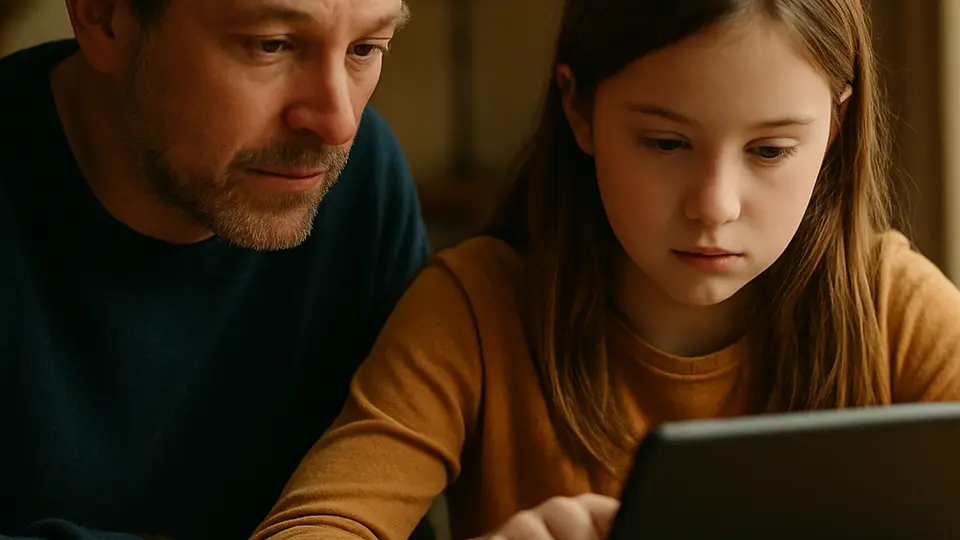
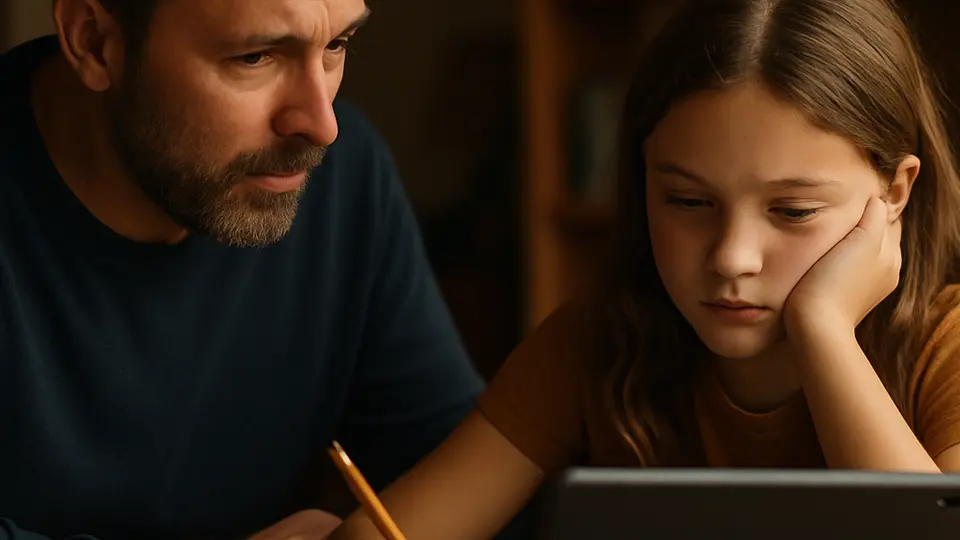
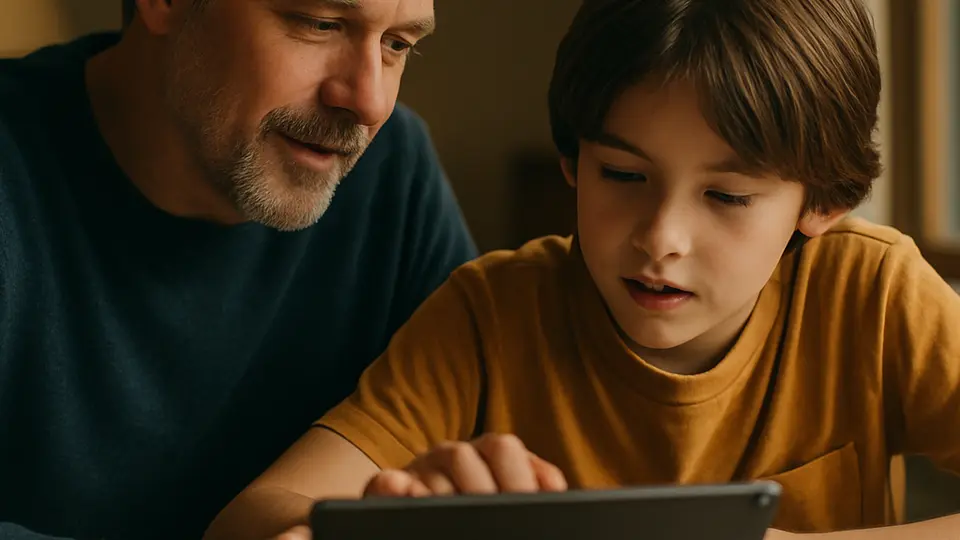
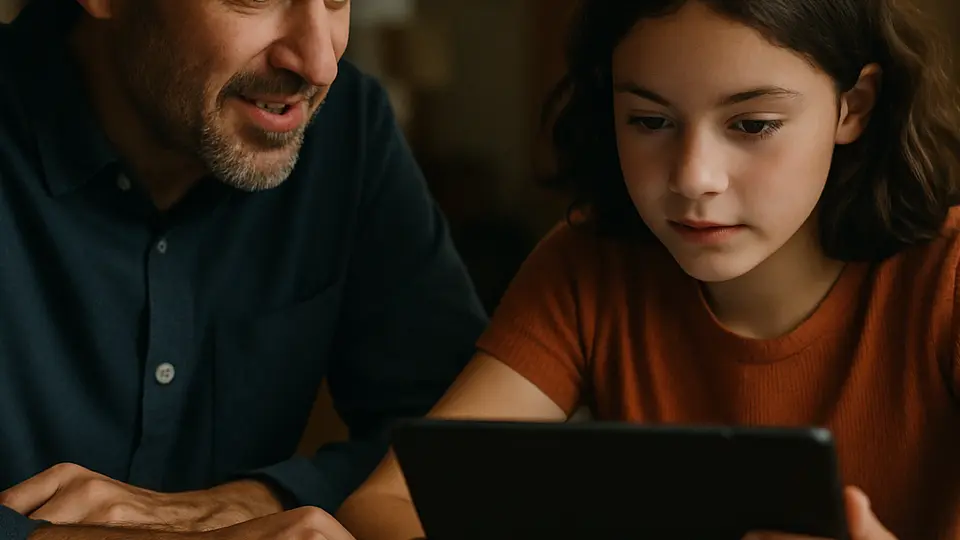
Finding ChatGPT in your kid's browser history is not automatically a crisis. Some uses of AI for homework support learning; others replace it. The most useful thing you can do is have an honest conversation rather than react with punishment.
You're checking the browser history — maybe looking for something else entirely — and there it is. ChatGPT. Your kid's math homework folder is open in another tab. Your first feeling is probably somewhere between annoyed and worried.
Take a breath. This is worth handling carefully, because how you react in the next hour can shape how your child relates to AI for years.
First: What Were They Actually Doing?
Before assuming the worst, look at what you can see. AI gets used in a lot of ways, and not all of them are problematic.
On one end, there is clear cheating: asking ChatGPT to write an essay and submitting it word for word. This is academically dishonest in almost every school context, and it also means the student missed whatever skill-building the assignment was meant to do.
On the other end, there is completely reasonable use: asking ChatGPT to explain a concept that was confusing in class, checking whether a math approach makes sense, or brainstorming ideas before actually writing. This is not much different from looking something up online.
In the middle, there is a wide gray zone. Asking AI to outline an essay and then writing it yourself. Having AI check grammar. Getting AI to generate examples and then explaining them. Whether this is okay depends on the assignment, the teacher's expectations, and your family's values.
Most kids who use AI for homework are somewhere in that gray zone. Very few are engaged in full-scale cheating. Most are just trying to get through an assignment more easily — which is also what adults do.
The Conversation to Have (Not the Lecture)
Resist the urge to walk in and start talking. Start by asking.
"Hey, I noticed you were on ChatGPT while you were doing homework. Can you tell me how you were using it?"
Then listen. Do not interrupt. Do not immediately categorize what they say as okay or not okay. Just get the picture first.
After they explain, some useful follow-up questions:
- "Does your teacher know you used it? What do they think about that?"
- "Can you explain to me what your homework is actually about?"
- "What did you learn doing this assignment?"
The last question is the most important one. The point of homework is not to produce a document — it is to build knowledge and skills. If your kid can walk you through the ideas in their own words, they learned something. If they have no idea what they submitted, they did not.
Learning vs. Cheating: The Practical Line
Here is a simple way to think about it that you can share with your kid:
AI is a tool, like a calculator. A calculator is fine in math class because the goal is to understand math, not to become fast at arithmetic. But if the goal of the assignment is to practice the calculation itself, using a calculator defeats the purpose.
AI works the same way. If an assignment is meant to build writing skills, having AI write it defeats the purpose. If an assignment is meant to test whether you understand a topic, having AI answer for you means you skipped the test.
The rule of thumb: would you be comfortable if your teacher knew exactly how you used AI on this? If yes, it is probably fine. If no, rethink.
What to Do If It Was Clearly Cheating
If your kid submitted AI-written work as their own, on an assignment where that was not allowed, they need to know that is a problem — and why.
The reason it matters is not abstract. When students skip the work of learning, they accumulate gaps. Those gaps show up later, when the topic comes up again in a harder class, on a test, or in a real situation where the skill actually matters.
A few practical steps:
- Let them know you saw it and that it matters. Keep the tone serious but not panicked.
- Ask them to redo the assignment on their own, even if they cannot turn it in again. The redo is about learning, not grades.
- Talk about your family's expectations going forward. Be specific — not "don't use AI," but "for essays and writing assignments, we expect you to write your own drafts."
- Consider whether to contact the teacher. This is a judgment call. If the assignment was graded, the teacher may need to know. If it was practice work, you may decide to handle it at home.
Conversation Starters by Age
For middle schoolers (10–13): "AI tools are really useful, but they can also do your thinking for you — and that is the part you actually need to do yourself. What do you think the difference is between using AI to help and using it to cheat?"
For high schoolers (14–17): "I am not mad, but I want to understand how you are using this. Because AI is going to be part of your work life too — and knowing when to use it and when not to is actually a real skill. Let's talk about where you think the line should be."
Setting Ground Rules That Actually Stick
Rules that students help create are more likely to be followed than rules handed down from above. Consider having a short family conversation where you make the policy together.
Things to decide:
- Is AI okay for research and understanding, but not for writing drafts?
- Does using AI need to be disclosed to the teacher?
- Is there a difference between different subjects or assignment types?
- What happens if the rule gets broken?
Write down what you agree on. Review it when a new school year starts, because the tools change and school policies change too.
What to Try Next
If you want to set up practical safety controls on ChatGPT for a younger user, ChatGPT Parental Controls and Safe Setup for Kids walks through the current options step by step. If you are curious about AI detectors — and why they probably should not be the thing teachers rely on — AI Detectors Tested has a clear-eyed look at how they actually perform.