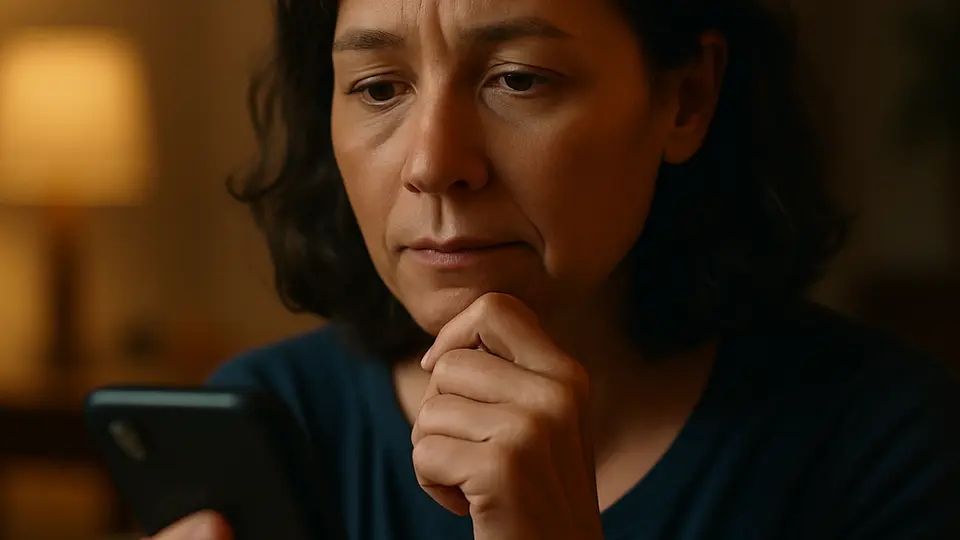
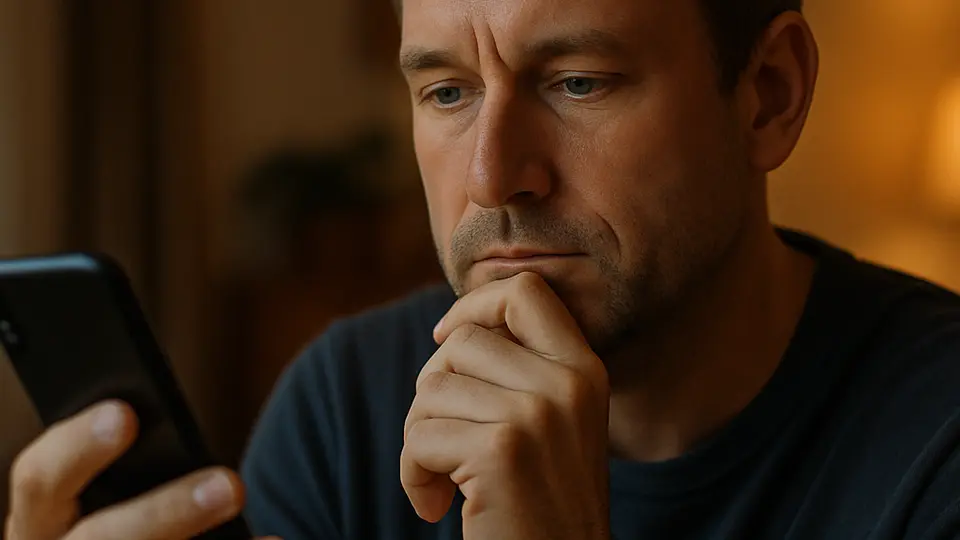
In the AI-powered grandparent scam, a caller uses a cloned voice to sound exactly like a grandchild in distress, then demands untraceable payment. The family safety plan that works is simple: agree on a secret code word in advance that only your family knows, and make it a rule that anyone asking for emergency help by phone must give it.
The account below is a composite based on patterns common to reported grandparent scam cases. Names and details are fictional. It illustrates how this scam unfolds so you can recognize the warning signs.
It was a Tuesday morning when Margaret's phone rang. She recognized her grandson Daniel's voice immediately — that same voice she'd heard hundreds of times, with the specific way he said "Grandma" that made it sound like he was already a little apologetic for calling.
"Grandma, I'm in real trouble."
He'd been in a car accident in another city, he said. Not his fault. But the other driver was hurt and the police were there. He needed $4,800 in gift cards — right now — to cover the other driver's medical costs before they pressed charges. And please, please don't call Mom and Dad. He didn't want them to worry, and there wasn't time anyway.
Margaret was already standing up, reaching for her purse.
What she didn't know was that Daniel was at work, fine, 40 miles away. The voice she heard was his — assembled from videos he'd posted online. A scammer had fed those clips into an AI voice-cloning tool and produced something close enough to fool his grandmother.
She drove to four stores and bought $4,800 in gift cards. By the time the real Daniel called that evening for their usual weekly chat, the money was gone.
How the Scam Works
The grandparent scam is one of the oldest phone fraud schemes — but AI has given it a new and much more convincing layer. Understanding the pattern is the first part of protecting against it.
Finding the audio. Social media is a goldmine for this. A TikTok video, a YouTube clip, a voice note shared on Instagram — security researchers have cloned a passable imitation from as little as three seconds of someone's natural speech, and current AI voice-cloning tools only get more convincing with a longer sample, easily enough to fool a close family member over the phone.
The call itself. The voice sounds right. The emotional urgency is high — an accident, an arrest, a medical emergency. The situation is designed to trigger protective instincts, not critical thinking. Every detail is chosen to make you feel you need to act immediately.
The "stay on the phone" rule. A key part of the scam is keeping you on the line or insisting you call back only on numbers they provide. This prevents you from taking 60 seconds to call your grandchild directly and verify.
A second caller plays an authority figure. Often a "lawyer" or "bail bondsman" or "police officer" comes on the line after the "grandchild," adding official-sounding pressure to the urgency. These characters are also part of the script.
An untraceable payment. Gift cards, wire transfers, and cryptocurrency are all commonly requested. All three are nearly impossible to recover once sent.
Why the Old Instincts Don't Work Anymore
Most of us grew up learning to trust our ears. If you recognize someone's voice, it must be them.
AI voice cloning has broken that assumption. The voice alone is no longer reliable evidence.
The emotional urgency makes it worse. When someone you love sounds frightened, every instinct says to help now. Scammers engineer exactly this pressure because they know it short-circuits the kind of careful thinking that would otherwise catch them.
There's no shame in being affected by this. It's designed to exploit the most fundamental human responses — love, protection, and trust. The defense isn't being less loving. It's having a plan in place before the call happens.
The Family Safety Plan: Five Steps to Do This Week
You don't need to wait until something happens. These five steps, done together as a family, take about 20 minutes and create a safety net that's hard to break.
1. Set Up a Family Code Word
Agree on a word or short phrase that only your immediate family knows. If anyone calls claiming to be a family member in trouble, they must give the code word when asked. No legitimate family member will be offended by the question.
Make the word memorable but not obvious — not a birthday, not a pet's name that appears anywhere on social media, not a shared last name. Something unexpected and specific. This guide on family safe words walks through choosing one and making sure everyone remembers it.
2. Set a "No Gift Cards" Rule
No court, no lawyer, no police department, and no government agency will ever ask you to pay a fine or fee with gift cards. This is always a scam, without exception. Agree as a family that anyone requesting gift cards as payment is to be hung up on immediately, no matter how convincing the story sounds.
3. Make It Normal to Hang Up and Call Back
Decide together that it is always acceptable — for any family member, any age — to say: "I'll call you right back from the number I have for you." This is not rude. It is safe.
A real family member in a real emergency will wait 60 seconds for a callback. A scammer will argue against calling back, push for urgency, and insist you stay on the line. That insistence is itself a warning sign.
4. Keep Social Media Audio Private Where Possible
This scam requires the scammer to collect audio samples. On platforms like TikTok, Instagram, and YouTube, consider:
- Setting personal videos to friends-only or private where it makes sense
- Being thoughtful about which family members have public-facing accounts with speaking video
This won't eliminate all risk, but it limits the raw material available for cloning.
5. Talk About It Together, Without Alarm
The most important part of this plan is that everyone in the family knows about it — including the grandchildren, who may be the ones most likely to have public video online.
Have one conversation — a family call, a message in a group chat, a visit — where you walk through what the scam looks like and what your family's code word is. Not to frighten anyone. Just to be ready.
What to Try Next
Now that you know how this scam works, AI Voice Cloning Scams goes deeper into how voice-cloning technology works and what its current limits are. And if you want to sharpen your ability to recognize an AI voice in real time during a call, How to Tell If a Phone Call Voice Is AI gives you six specific things to listen for.
Sources
- Scammers use AI to enhance their family emergency schemes — Federal Trade Commission
- Family Emergency Scams — Federal Trade Commission
- 'Grandparent' Scams Get More Sophisticated — Federal Communications Commission
- Artificial Imposters: Cybercriminals Turn to AI Voice Cloning for a New Breed of Scam — McAfee
- Scammers Target Older Adult Victims — Federal Bureau of Investigation